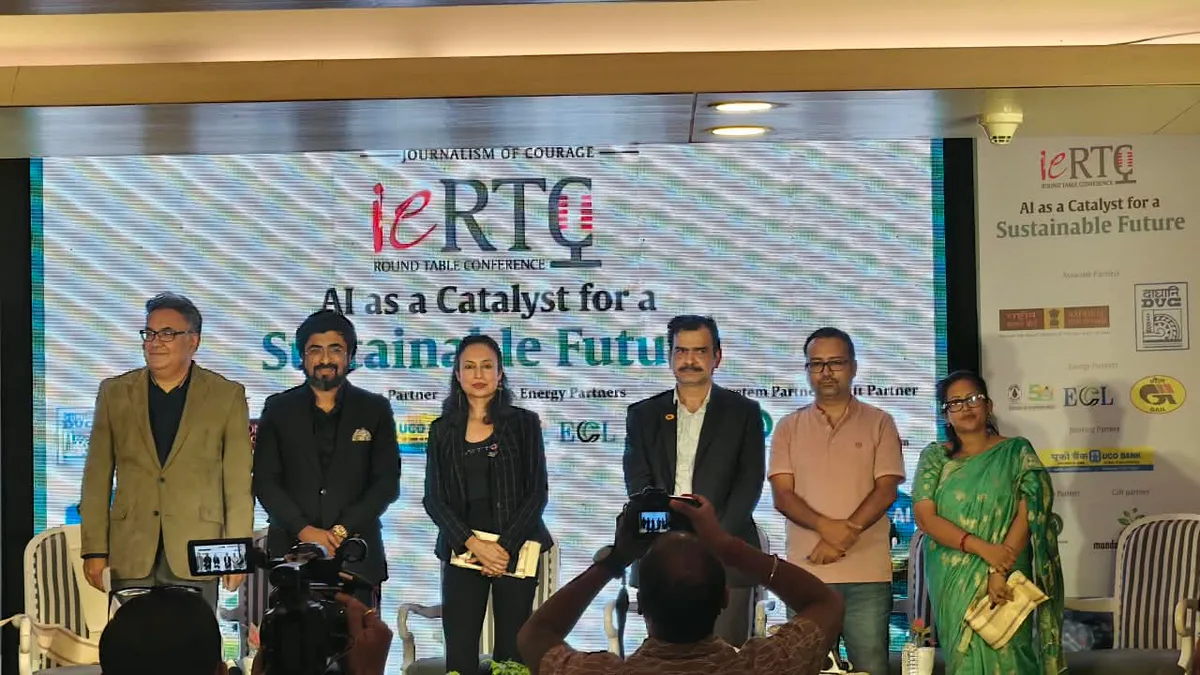
Artificial intelligence is finding its place in conversations about climate change, waste management and sustainable development. But how can this technology make a difference beyond the digital world? This question was central to the round table conference organised by The Indian Express Group on September 30, 2026, at Tollygunge Club, Kolkata. The conference, themed “AI as a Catalyst for a Sustainable Future: Accelerating the Journey to a Low-Carbon Economy,” brought together professionals from industry, academia and environmental institutions to discuss the role of technology in addressing environmental challenges.
AI for Net Zero: Turning Data into Action
The first panel, AI for Net Zero – Accelerating the Journey to a Low-Carbon Economy, featured Dr. Pritha Bhattacharyya of the Department of Environment, Calcutta University; Dr. Prakash Pradhan of the West Bengal Biodiversity Board; Mr. Pushkar, Chief General Manager, Eastern Region, GAIL; Mr. Aditya Vikram Birla of Cosmic; Sri Amit Srivastava of UCO Bank; and Sanghita Chatterjee, Director of the Indian Plastic Federation.
The discussion brought attention to the potential of AI to improve resource efficiency and support the shift towards a low-carbon economy. By analysing large volumes of data, technology can help businesses identify inefficiencies, make informed decisions and improve the way resources are used. Another important consideration was accountability in waste management. Transparent digital records and better tracking systems can help monitor waste movement, discourage improper disposal and improve the measurement of circular economy efforts.
Smart Cities and Climate Resilience
The second panel, Smart Cities and Climate Resilience, included Dr. Anirban Roy of the West Bengal Biodiversity Board, Anupam Mukhopadhyay of Bengal Gas, Sri Debasish Sen of HIDCO and Aaron Jude, known as Backyard Botanist. A key issue was how cities can use real-time climate and demographic data to prepare for environmental risks. Better data can support urban planning, strengthen disaster preparedness, and help authorities respond more effectively to extreme weather events.
The role of environmental education also deserves attention. AI may assist in predicting natural disasters and improving early-warning systems, but communities need to understand the risks and know how to respond. The same principle applies to waste management. Educating people about plastic waste, segregation and responsible disposal is essential if better systems are to work in practice.
From Discussion to Implementation
One of the key takeaways from the conference was that technology alone cannot deliver sustainability. AI can improve predictions, tracking and resource management, but its effectiveness depends on how these tools are implemented and whether people and institutions act on the information they provide.
The real opportunity lies in combining technological progress with environmental awareness, transparent practices and coordinated action. Turning these discussions into practical solutions will be the next important step towards a more resource-efficient and climate-resilient future.