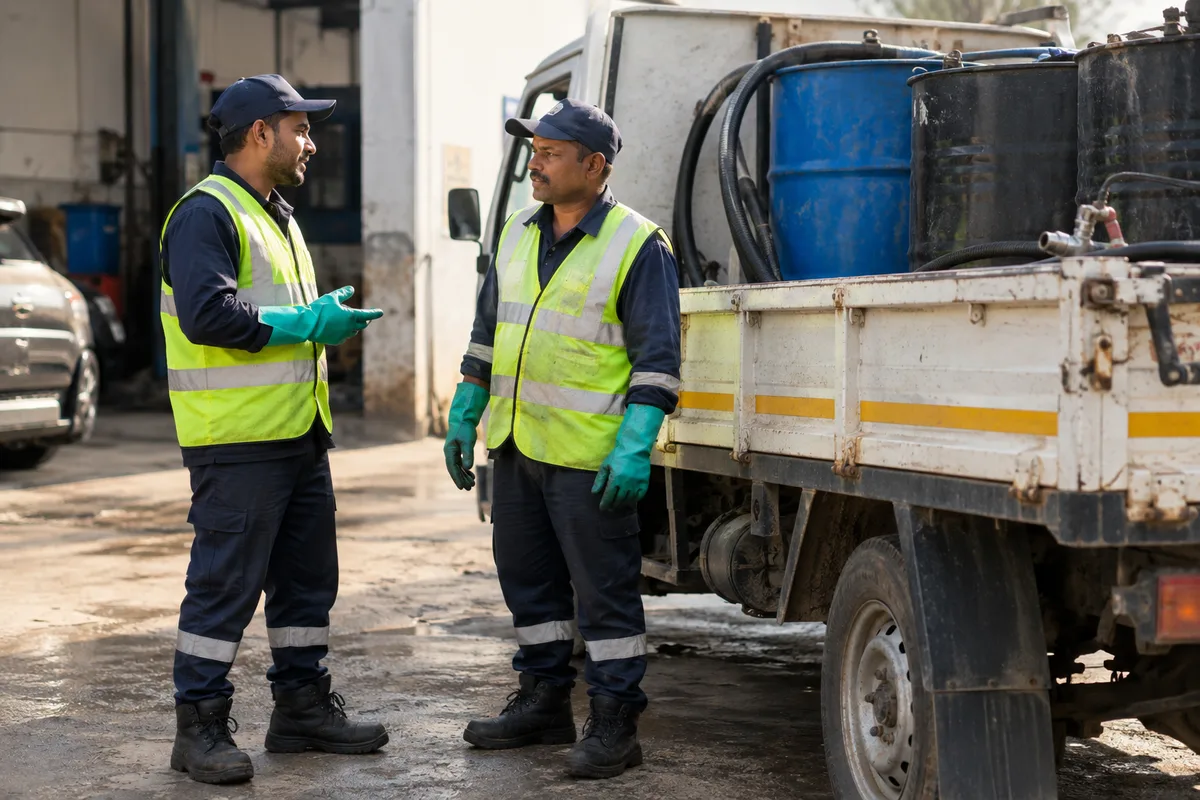
Used oil collectors play an important role in responsible waste management. They collect used lubricating oil from workshops, garages and industrial facilities, helping to ensure it reaches the appropriate recycling channels rather than being disposed of carelessly.
However, their work carries risks that cannot be mitigated by safety equipment alone. Gloves, protective clothing, safety shoes and other protective gear are essential, but protecting collectors requires a broader approach.
Safety Begins With Proper Training
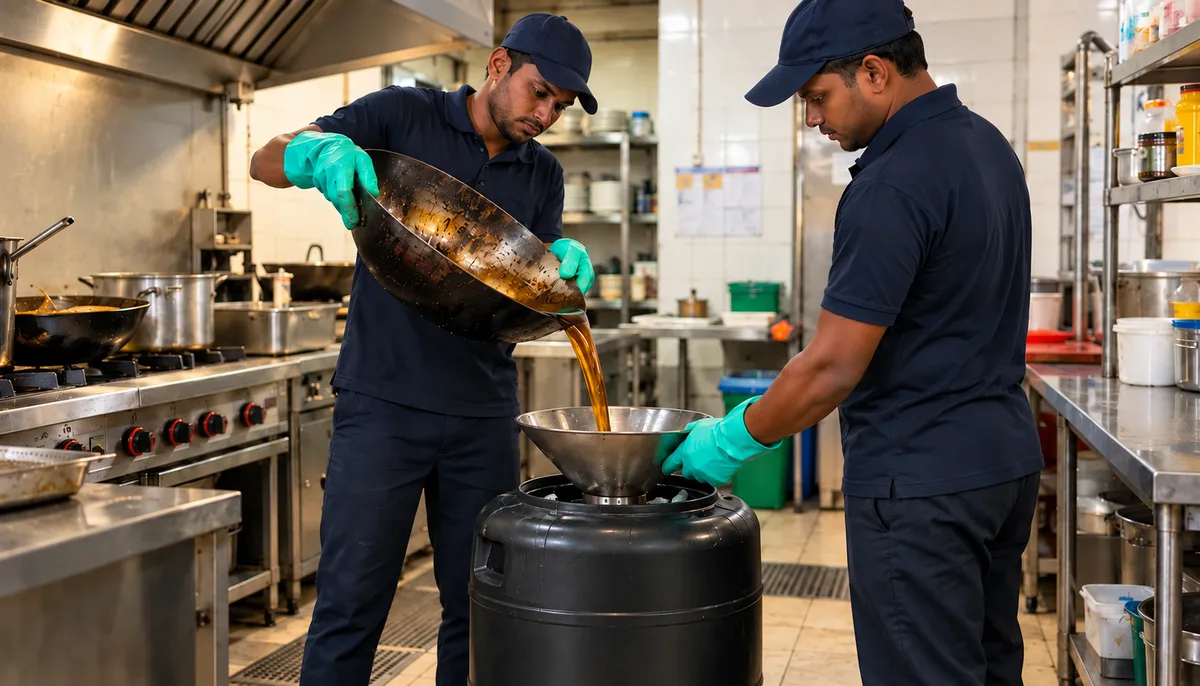
Having protective equipment does not always mean knowing how to use it correctly. Collectors need practical training on handling used oil, identifying potential hazards, preventing spills and responding to accidental exposure.
They should also understand how to store oil safely, handle containers without unnecessary risk, and follow appropriate procedures during transportation. Regular training helps turn safety instructions into everyday habits.
Health Check-Ups Matter
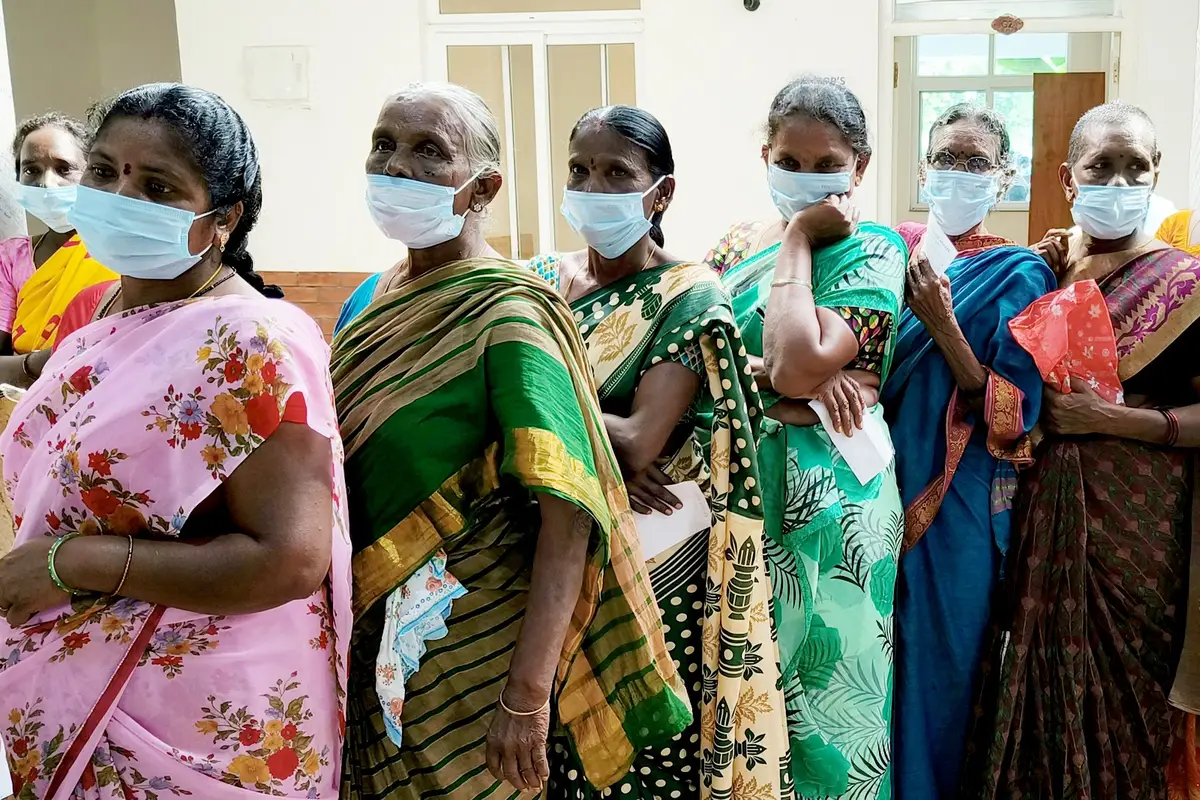
Repeated exposure to used oil, workplace contaminants and physically demanding conditions can affect a worker's well-being. Collectors may also spend long hours travelling, lifting containers and working in environments where access to healthcare is limited. Regular health check-ups can help identify potential concerns early and encourage workers to seek medical advice when needed. Health support should not be treated as an occasional benefit; it should be part of a responsible collection system.
Better Equipment and Working Conditions
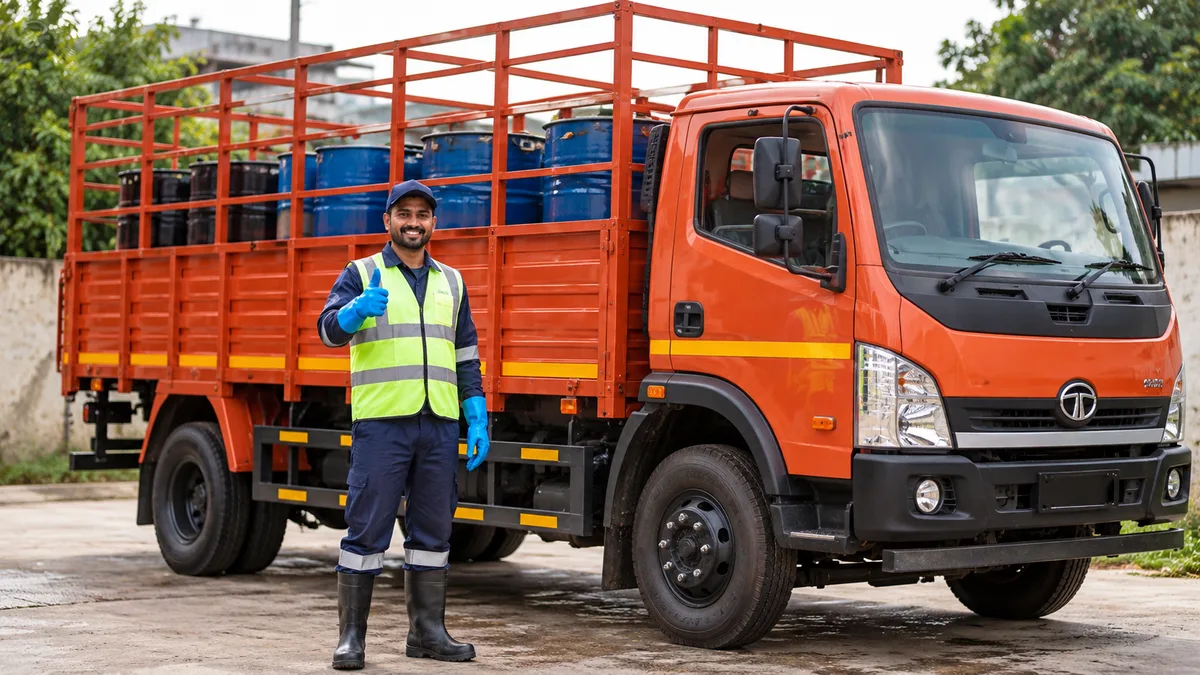
Safety equipment must be suitable for the task, available when needed and replaced when damaged. Collectors also need access to appropriate handling tools, secure storage arrangements and suitable collection vehicles. These practical measures can reduce avoidable risks and make daily work safer and more manageable. Providing equipment without explaining its proper use or maintaining it regularly leaves important gaps in protection.
Dignity, Awareness and Livelihood Support
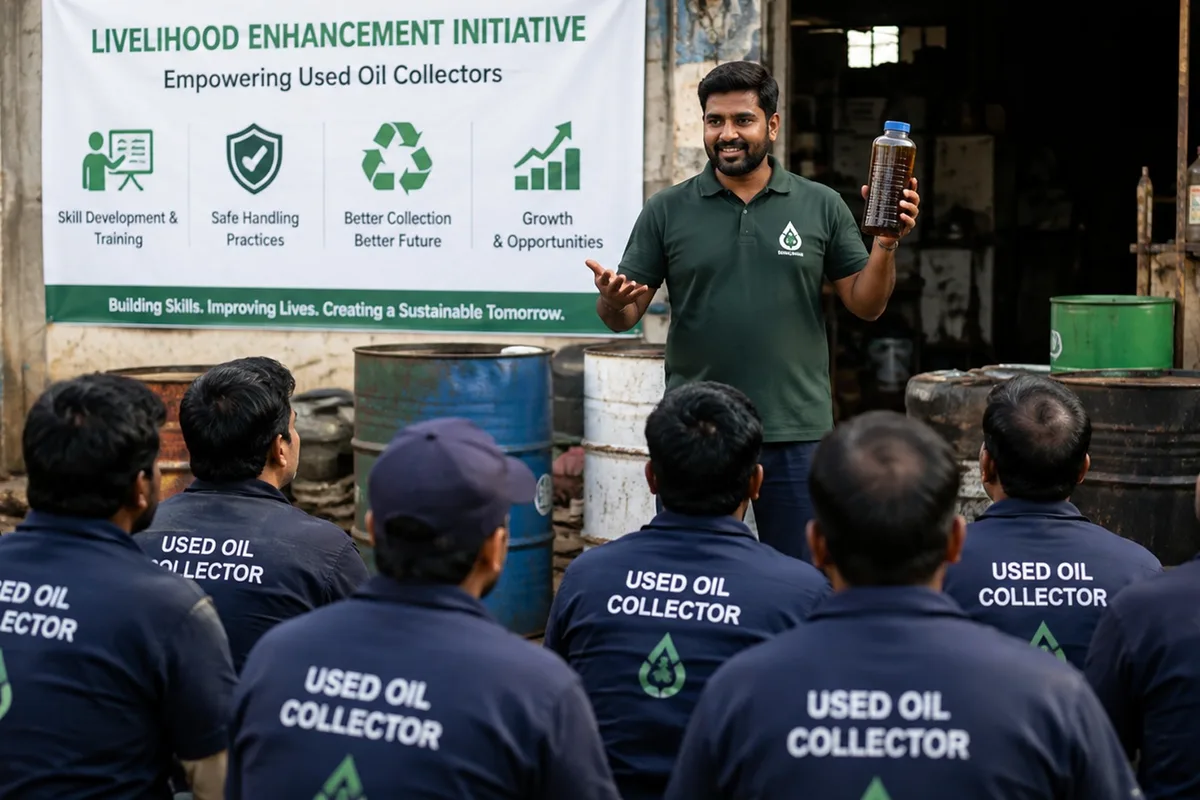
The people who collect used oil are an essential link in the recycling chain, yet their working conditions and health needs can receive less attention than the environmental benefits of recycling itself. Recognising their contribution means listening to their concerns, improving awareness, supporting skill development and encouraging fair, dependable working arrangements. A safer workplace also depends on whether collectors feel comfortable reporting hazards and asking for help.
Building a More Responsible Used Oil Ecosystem
Responsible used oil management must protect both the environment and the people handling the waste. Safety equipment is a necessary first step, but it works best alongside training, healthcare access, suitable vehicles, better working conditions, and continued support. At the Responsible Used Oil Management Foundation (RUOMF), the focus extends beyond collection and recycling to the people who make this work possible. Because responsible waste management should not only reduce environmental harm; it should also help safeguard the health, safety and dignity of the workers behind it.